Product Design / Innovation
Why Prototyping Still Matters in the Age of AI
There is a tempting conclusion to draw from generative tools: if a machine can produce a polished, clickable interface in minutes, prototyping is solved. We think the opposite is true. Polished output arriving early is exactly the condition under which prototyping discipline is easiest to lose — and most needed.
A prototype is a question, not a deliverable
The purpose of a prototype was never to look finished. It was to make a specific uncertainty visible so that reality could answer it. Will people understand this model? Will they trust it with something that matters to them? Does the value survive contact with the mess of an actual workflow?
A generated screen answers none of those questions on its own. It only makes the question easier to ask. Confusing the artefact with the answer is the most common mistake we see teams make with fast tooling.
Rough on purpose
IDEO's design practice has long framed prototyping around three qualities: rough, rapid and right — keeping work unfinished so people feel free to criticise it, moving quickly so learning stays cheap, and building only the part that answers the question at hand. Their recent writing revisits those principles specifically in the context of AI, arguing that the fundamentals hold even as the tools accelerate.
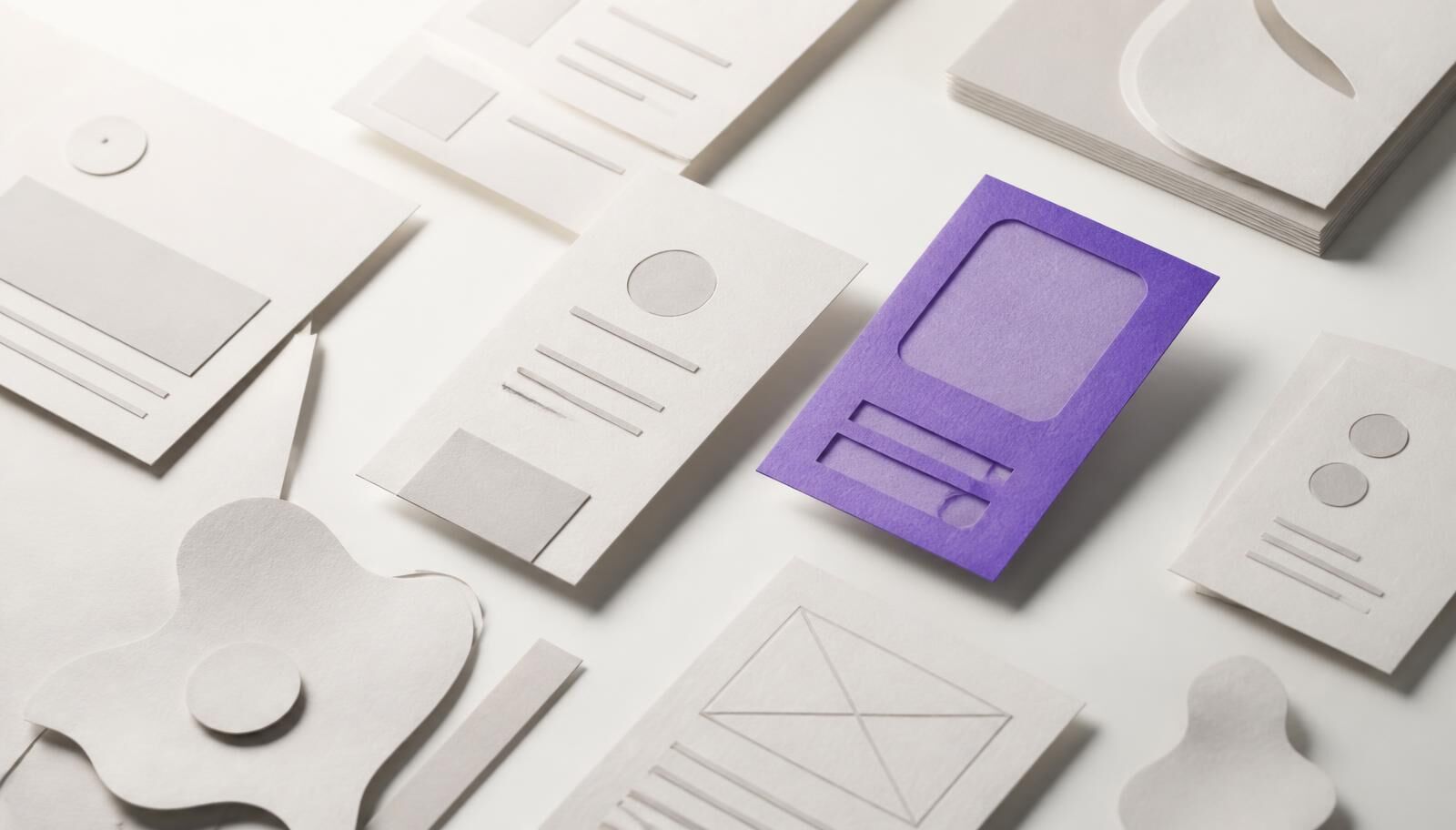
The roughness matters more than people expect, and it is the first casualty of AI polish. Show someone a crisp, confident interface and they respond as a critic of a finished thing: they hedge, they compliment, they assume the decisions are settled. Show them something visibly unfinished and they respond as a collaborator — they redraw it, argue with it, tell you what is missing.
Fidelity signals commitment. If you don't want commitment yet, don't signal it.
Speed only helps if learning keeps up
Rapid prototyping was always about shortening the loop between idea and evidence. AI shortens one half of that loop dramatically and leaves the other half untouched: finding the right people, watching them honestly, and interpreting what happened still takes human time.
When only one half accelerates, teams drift into producing variations nobody has tested. The volume feels like progress. It isn't. We keep the ratio deliberate — every burst of generation is tied to a plan for who will see it and what we expect to learn.
Right means answering one question at a time
The hardest of the three qualities is choosing what a prototype is actually for. A generated app can be simultaneously about navigation, tone, pricing and onboarding, which means it is about nothing testable. We prefer narrow prototypes with one job:
- A single screen to test whether people understand a concept's name.
- A fake data flow to test whether the output is trusted enough to act on.
- A manual, human-behind-the-curtain version to test whether the value exists before building the intelligence.
How we use AI in prototyping at Niwatech
We use generation freely for breadth — plausible variants, throwaway content, stand-in states — and hold the line on three things: we keep early artefacts visibly provisional, we put them in front of real people quickly, and we write down what we expected to happen before we watch. When the result surprises us, that is the return on the whole exercise.
Faster tools do not make judgement optional. They make the gap between teams with judgement and teams without it much easier to see.
Sources & further reading
This article is an original Niwatech perspective. The research below informed our thinking and is worth reading in full.